Immigration needs to be placed at the centre of Australia鈥檚 national story, according to economist, author and former senior public servant Mark Cully.
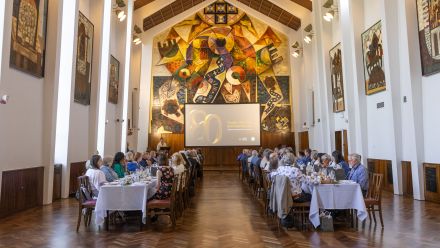
Cully, an expert panel member of the Fair Work Commission and a Visiting Fellow at The Australian 精东传媒app University (ANU) Crawford School of Public Policy, discussed his new book, Waves of Plenty: Immigration and the Making of Australia, at a recent ANU Meet the Author event convened at the University.
He was joined in conversation by Professor Alan Gamlen, founding director of the ANU Migration Hub and a professor in the ANU School of Regulation and Global Governance.
Cully has drawn on extensive experience in public policy and economics to examine how successive waves of immigration have shaped Australia. He was chief economist at the federal departments responsible for immigration and industry, chaired the OECD鈥檚 Working Party on Migration and led the design of the JobKeeper program as head of macroeconomic policy at Treasury.
Cully said one of the book鈥檚 aims was to address migration鈥檚 limited place in many general histories of Australia.
鈥淭he history of Australia is a chapter in the history of migration,鈥� he said.
鈥淚 wanted to write something which answered partly that question, 鈥榃hy Australia prospered?鈥�, and put migration right in the centre of it.鈥�
Cully identified the 1970s as an especially important period in Australia鈥檚 migration history. He believes the decade was at least as significant as the better-known postwar migration period of the 1950s.
By the end of the 1970s, Cully says, migration had helped make Australia a more diverse and outward-looking country.
鈥淎ustralia was a different country than it had been in 1947. More worldly, more vivacious, more contested over matters beyond class and religion,鈥� he said.
鈥淭he migrant presence in Australia was cemented and felt everywhere, especially in the cities, where it coloured and adorned daily life.鈥�
The conversation also covered migrant settlement, the contribution of family and community networks, the experiences of migrants and their children, and the future of Australia鈥檚 migration system.
Top image: Jack Fox/ANU